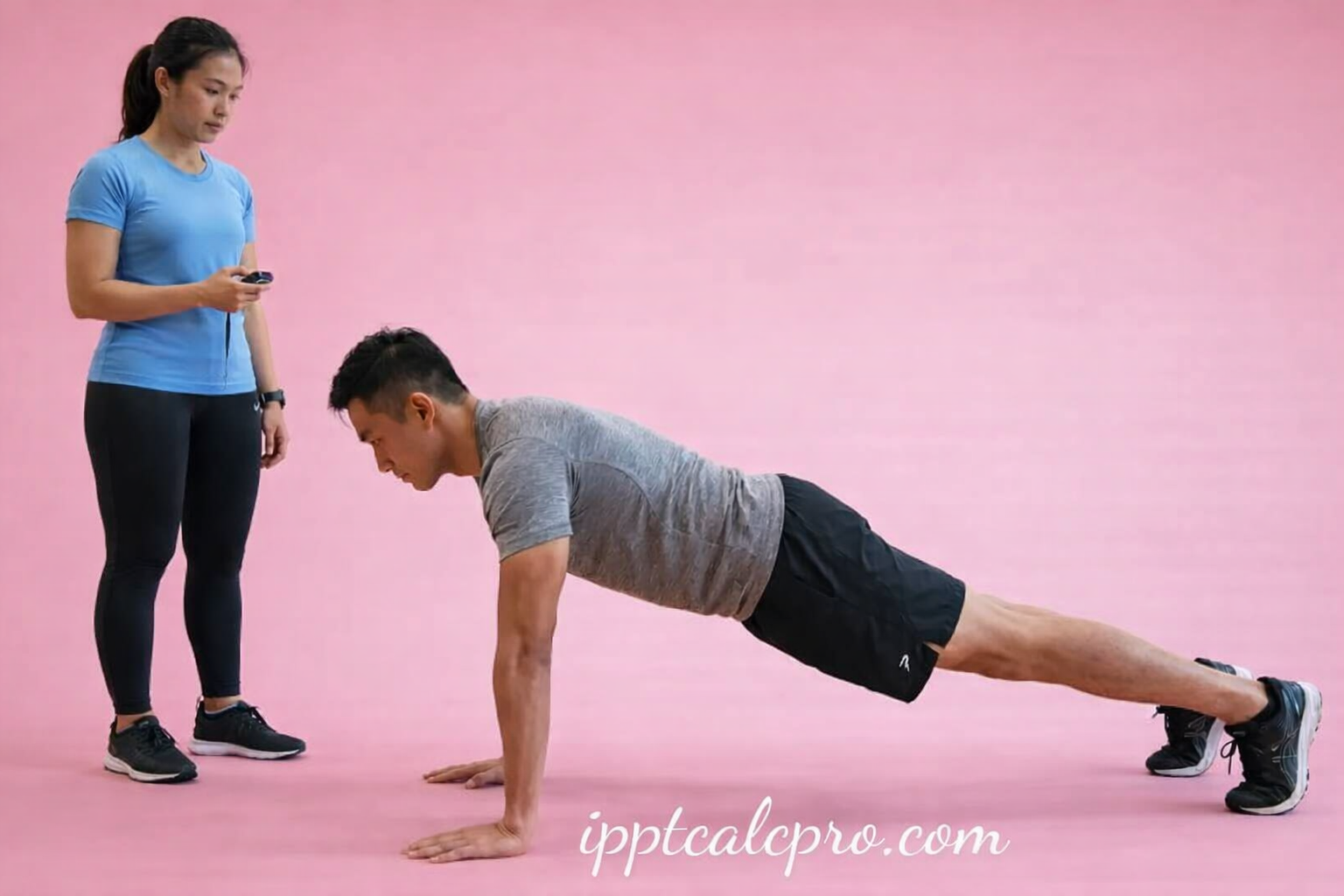
How to Stop Getting No-Counts in Push-Ups – The No-BS Guide to 60 Push-Ups
The ELISS Headache
With 15 years of coaching, I have seen many trainees do 50 push-ups in gyms and walk into test day with a good mood, only to look at the screen and see 30, and that is where the ELISS machine becomes a real headache in IPPT because gym push-ups often reward effort and feeling, while IPPT push-ups reward only clean reps; the machine is very strict, so your chest must meet the mark, your arms must finish properly, your elbow position cannot be loose, your body must stay aligned, and even extra air time or a rushed rhythm can lead to no-counts, which is why many people feel shiok during training but still lose the count when the system checks every rep, and you can often see the shock clearly on the face when the number does not match what they expected.
- Speed Can be quick, springy, or slightly rushed.
- Depth Going low is usually enough in most gym sets.
- Elbows People often use whatever style feels comfortable.
- Lockout A full finish is often ignored during normal training.
- Speed Movement must stay controlled so the sensors can register properly.
- Depth You need to hit the exact infrared beam for the rep to count.
- Elbows Around 45° is usually the safer and cleaner position.
- Lockout Mandatory. The system must detect full extension at the top.
At Maju Camp, Bedok Fitness Conditioning Centre, and Kranji Camp, I have seen even strong guys lose valid-looking reps because the system does not reward strength alone; in real IPPT testing, control, timing, and clean movement matter more than ego, so one of the hardest lessons behind the ELISS headache is accepting that every rep must match the standard, not just feel powerful.
Training Your Explosive Power
For IPPT, push-ups are a different game because the test is not about doing 80 or 100 slow reps over five minutes, but about producing fast, controlled clean reps in 60 seconds, and from what I have seen on test day, the biggest mistake is training too slowly for too long, since the body then struggles to match the speed needed, the arms lose drive, the rhythm goes off, the form breaks, and no counts start showing up, so the smarter way to train is to build sharp movement, better timing, and strong repeat effort that actually matches the pace of the real test.
Training Your Explosive Power changed the way I coach push-ups, because real improvement does not come from endurance alone; with EMOM training, a timer, and a hard clock, you teach the body to produce speed and power from the bottom position, hold form under fatigue, and build real confidence at test pace, so a simple session like 10 minutes of focused work with 15 reps each round can make your movement feel sharper, stronger, and far more reliable when it matters.
The Cheat Code for the Last 10 Seconds
In the last 10 seconds, this is where points are either saved or lost, and from what I have seen with many trainees, the problem is not always that you are weak but that your arms are burning, your breathing turns messy, your form starts to collapse, and no counts appear because you begin rushing instead of staying in control.
The best fix is a simple reset trick: when your rhythm breaks, pause at the top position, lock your arms, straighten your body, take one breath, then a sharp breath, and use that one second reset to save three or four clean reps instead of wasting energy on bad ones.
The second part is mentally managing the pressure, because staring at the number 60 push-ups when you are tired can trigger panic, so you need to break it down into sets of 10, finish one set, keep your mind clear, then attack the next one. In those final seconds, stay tight, stay sharp, and chase clean reps instead of desperate ones or rushed ones, because that calm approach protects your score far better than forcing movement when the body is already under pressure.
Common Mistakes Why the Machine Hates You
Common Mistakes Why the Machine Hates You usually start with small things, not because people are weak, but because the machine is unforgiving and notices details that many miss. The first mistake is watching the counter because the moment you lift your head, your body line changes, the rep may not register, and the fix is simple: keep your eyes down, keep your neck neutral, and stay focused on clean movement instead of chasing the number while the machine says no.
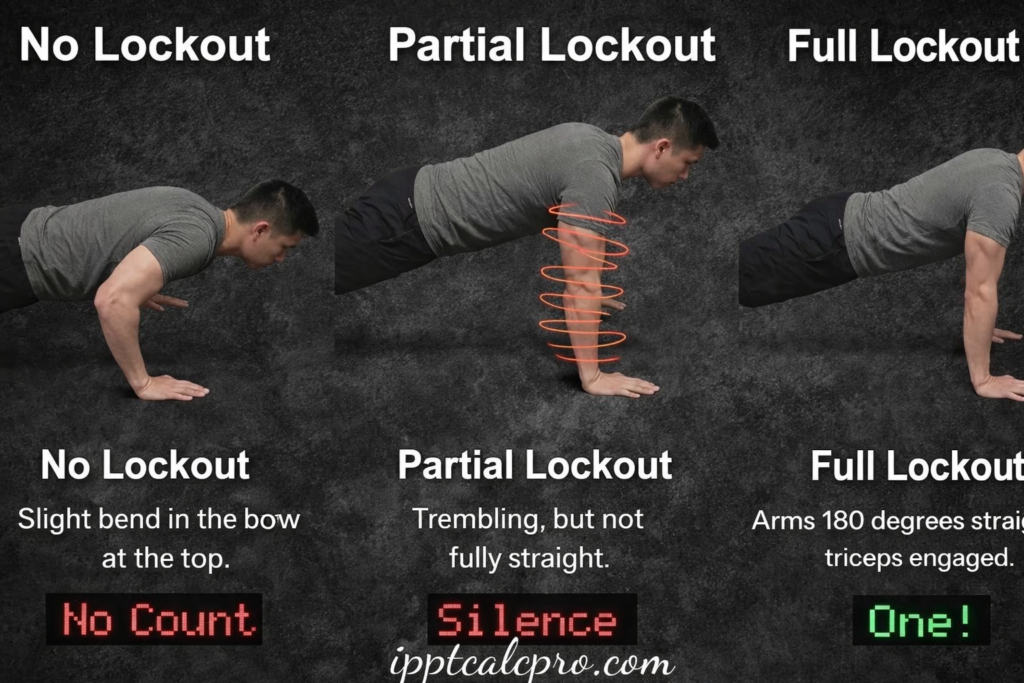
The second big issue is not fully locking out the elbows at the top even when the arms feel straight, and I also see many trainees lose good counts because of poor hand placement that throws off standard form and makes the sensors reject the rep. Keep the arms strong, place the hands properly, and aim for cleaner reps, because once those basics are fixed, the machine stops feeling unfair and starts counting what you actually earn.
Why it’s the #1 reason for “No-Counts”
The ELISS machine uses sensors to track your movement. It has a “start” point (the top) and a “finish” point (the bottom).
The Trap: when fatigue kicks in, you start doing short pumping reps, coming only halfway up before dropping straight back down again.
The Result: because your arms never fully straighten, the sensor reads it as the same rep still in progress and will not count the next one until you return to the full lockout position.
What is “Lockout”? And Our Advice
In a proper push-up, lockout means your arms reach full extension at the top, your elbows straighten out completely, and your upper body finishes in a clean straight line. From what I have seen, many people lose easy reps because they try to rush the movement and never truly lock the position, so the machine reads it badly and may return a No-Count even when the rep felt good.
| Status | How Your Arms Appear | Machine Response |
|---|---|---|
| No Lockout | Your elbows still hold a slight bend at the top position. | No count because the machine reads the rep as incomplete. |
| Partial Lockout | Your arms rise, but they do not finish in a fully straight position. | High risk of no count because the system may not confirm the rep. |
| Full Lockout | Your arms are fully straight and your triceps clearly finish the push. | Rep counted properly because the machine detects a complete lockout. |
So do not always try to finish fast, bro. On every single rep, let your triceps click into place before you go down again, because when the machine goes diam, it usually means your finish was incomplete, not unfair. It is honestly better to get 40 perfect reps than chase 60 fast ones, lose 30, waste energy, and walk away frustrated.
Recovery and Gear
Recovery and Gear matters more than many people think, and from my coaching experience, my honest bro advice is simple: training hard helps, but real recovery is what makes you stronger, so if your muscles stay sore, basic support like whey protein or creatine can help the body recover faster and push more reps in the next session; for home practice, avoid the bare floor, because a cheap yoga mat protects the elbows, keeps your form stable, and if your wrists have pain, simple push up bars are one of those simple tools that can make a big difference without overcomplicating things.
Conclusion
From coach to trainee, this kind of training is never just about trying to pass because push-ups are only part of the equation, and the run, sit-ups, and your overall effort must work together to secure IPPT Gold or even push you toward Gold and Silver goals step by step. I have seen ordinary guys spend years failing, then turn things around with one month of siong training, a better mindset, clean form, proper recovery, and hard work, and that shift brings real progress, a better score, and sometimes even five hundred dollars in real money, not imaginary points.
Use your numbers wisely before test day, check your target with an IPPT calculator, follow an IPPT Strategy Guide, and learn how to game the system the smart way, because when you stay consistent, trust the process, and stop feeling nervous, the result is not just IPPT Gold but also extra cash in your pocket, lifetime bragging rights, and the kind of reward that proves you really trained smart.