Mastering the IPPT Sit-Up Station: The 60-Second “Gold” Strategy
The sit-ups dissection
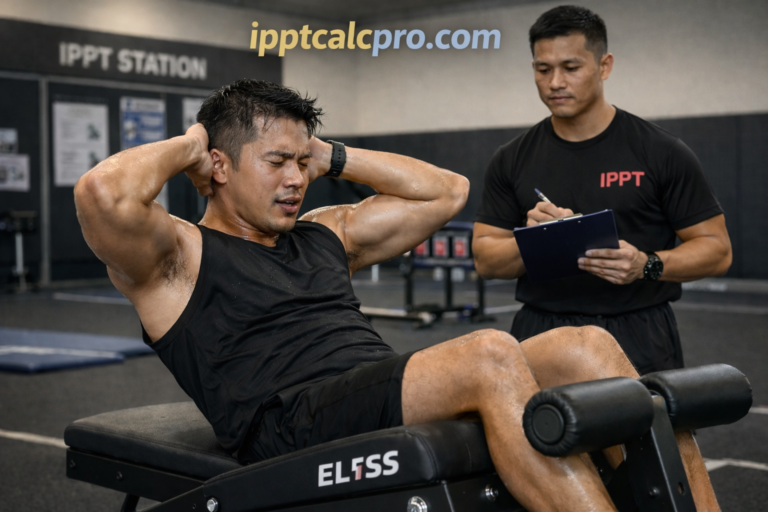
After watching thousands of soldiers take the IPPT, I can say the sit up station is the ultimate point stealer at this station. A person can be physically fit and still fail to get the points they deserve because the machine, ELISS, does not care how hard you are trying. It only counts when you hit the sensors correctly.
I have seen strong guys stop at average scores, and I have seen average guys surprise themselves because they understood the system. This is not cheating. It is about knowing how the test actually works.
The sit up station rewards clean movement, rhythm, and consistency more than brute strength. In this guide, I use a simple trainer’s playbook to help you maximize your reps, avoid the dreaded no count and every no count, and bank more points for a Silver or Gold award. These real coaching cues are the same ones I use on test day to help people squeeze out extra reps when it matters most.
The Anatomy of an ELISS-Proof Sit-Up
From what I have seen on many IPPT test days, most people focus on speed and numbers first, but the real key is to understand the machine and how the machine thinks. ELISS is very black and white: you either hit the requirement or you get nothing. Once you know the why behind the movement, your reps become cleaner immediately.
The Start, The Shoulder Blade Rule
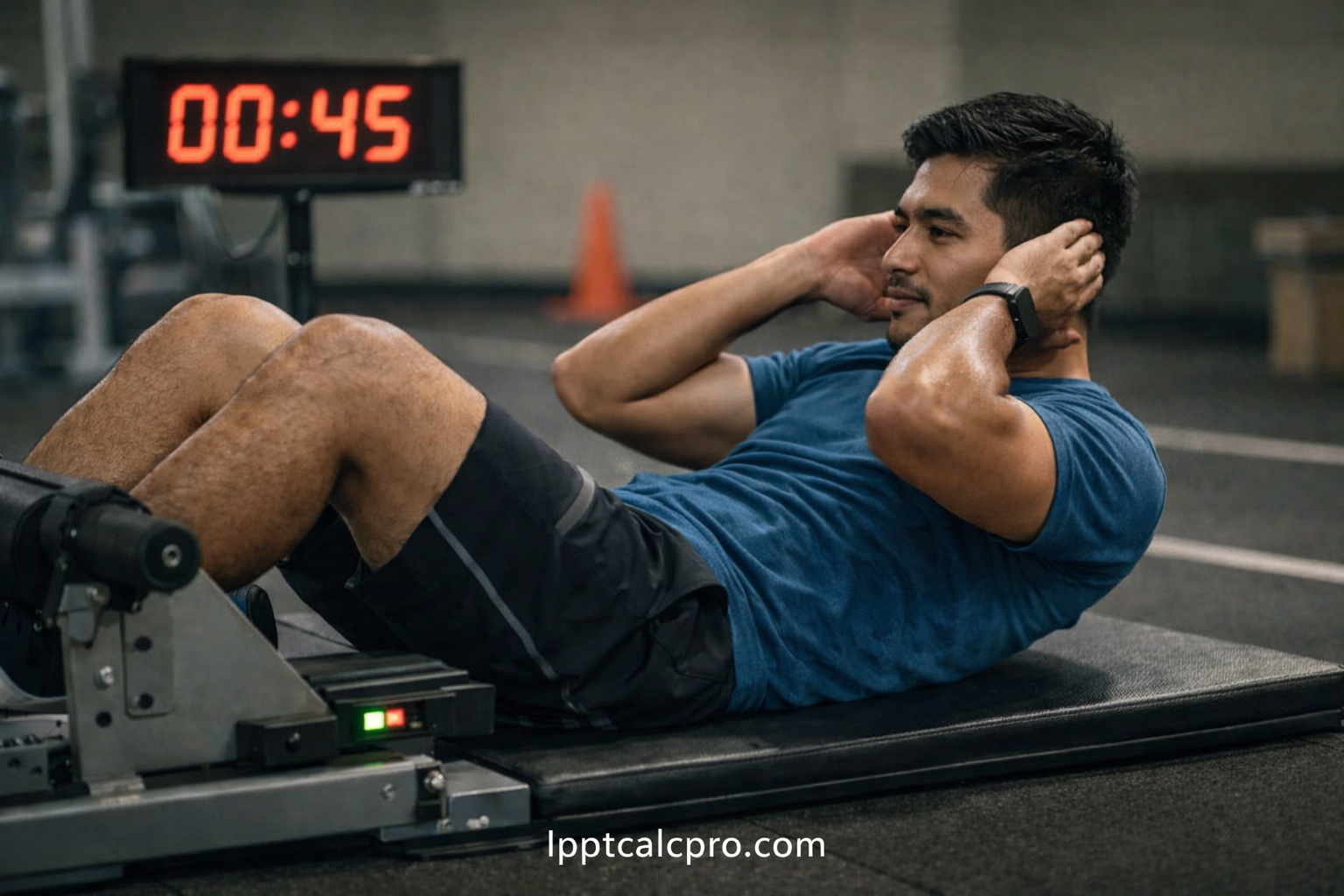
A counted rep always begins at the bottom. Your shoulder blades must press into the mat and trigger the sensor; if you stop halfway down, it will not count. I often see trainees rush, bounce, and skip fully resetting, but that only leads to burning energy and zero points. Do it properly, reset every rep, and remember there is no shortcut.
The Finish, Elbow to Thigh Plane
Here is the good news: you do not need to smash your elbows into your knees every time. In my coaching, I tell people to let the elbows cross the imaginary line of the thighs because that small detail saves energy. That shorter travel creates a faster rhythm, causes less fatigue, and helps smart trainees gain reps without wasting effort.
Hand Placement
For Hand Placement, I usually tell people that if their vocation allows, cupping your ears is often better than interlocking fingers, especially when the neck gets tired. In my experience, this keeps the movement cleaner and safer, with less strain and more control. Do not be kan cheong about small differences, because on test day these details become the foundation for better numbers.
The No Count Hall of Shame
In The No Count Hall of Shame, I call them ghost reps because you do the work, your abs screaming, sweat dripping, and the machine gives you absolutely nothing. I have seen many trainees lose easy points like this, and in my experience, it usually happens when effort is high but clean counting is poor.
The Butt Lift
This is a classic mistake at the sit-up station: when you get tired, your body tries to cheat by lifting the backside and using the glutes like a spring. From what I have seen on many test days, ELISS notices the moment the tailbone leaves the mat because the sensor catches it, and then that rep is gone. To keep your count safe, stay flat and stay honest.
The Flying Hands
Keep your Hands in the right position above your head; any break in form turns your effort into zero, as ELISS won’t count the rep and your neck can suffer. Focus, control, and steady Hands secure every rep.
Handling Sneaky Reps
During the Mastering the IPPT Sit-Up Station, fatigue can trick your brain into bargaining, making you think a rep that is a little short is okay. But ELISS does not negotiate—if your shoulder blades don’t fully touch the mat, the sensor won’t trigger and the rep disappears. In the last 20 to 30 seconds, many people rush, shorten their range, and sudden ghost reps go missing.
The fix is simple but not easy. Slow down each rep, let your upper back settle on the mat, then come up again. One clean reset is worth more than two rushed ghost reps. Stay calm, controlled, and finish every rep properly, making sure every motion counts.
Training Logic Volume vs Intensity
Let’s be clear: doing 100 slow sit-ups in your regular gym session won’t prepare you for test day. I’ve watched people make this mistake for years. The IPPT sit-up station isn’t a long-distance challenge—it’s a 60-second sprint. Your goal is to train your body to handle a full minute of pressure, not just to perform slow reps that look nice.
Density Training to Survive the 60 Seconds
One approach I really enjoy is density training, where you perform exercises every minute on the minute (EMOM).
- Set a timer for 8 to 10 minutes
- At the start of each minute, perform 12 to 15 sit-ups
- Rest for the remaining time in that minute
- Repeat this pattern until the timer ends
This workout helps your body bounce back quickly even when you’re tired. It also sharpens your breathing, timing, and mental focus. It may feel a bit uncomfortable—but that’s exactly how the test will feel.
The Last 15 Seconds Drill
Many people start to falter around 45 seconds—not because they lack strength, but because panic sets in. Their breathing becomes erratic, form suffers, and reps get lost.
The solution is simple: breathe in as you lower yourself, breathe out sharply as you crunch up, keeping your breaths short and steady. In the final 15 seconds, stop counting, stay relaxed, and keep moving. Don’t let yourself get kan cheong; calm breathing will help you complete free reps with control.
Pro Tip: The Recovery Phase
During training at the IPPT sit-up station, your abs are small muscles that recover quickly but can cramp if overworked. Between stations, try a simple cobra stretch: lie flat, press your palms down, lift your chest, and breathe deeply. Just thirty seconds is enough to reset and keep your body feeling loose for the next round.
Hip Flexor Fatigue
It’s normal if your legs feel more tired than your abs. Sit-ups rely heavily on your hip flexors, and if they’re weak, they tire quickly and can slow your performance.
Having strong hip flexors helps you perform reps more smoothly and conserve energy. Focus on training intelligently rather than just going through the motions, and the points will follow.
The 4-Week “Point-Climber” Schedule
| Week | Monday (Explosive Reps) | Tuesday (Core Stability) | Wednesday (Active Recovery) | Thursday (EMOM Density) | Friday (The Finisher) | Weekend |
|---|---|---|---|---|---|---|
| 1 | 3 sets of 20 reps (Speed focus) | 3 × 45s Planks + 20 Leg Raises | Light Swim or 20min Walk | 5-min EMOM (10 reps/min) | Max reps in 60s (Baseline) | Rest / Stretch |
| 2 | 4 sets of 25 reps (Speed focus) | 3 × 60s Planks + 30 Russian Twists | 15min Stretching / Yoga | 6-min EMOM (12 reps/min) | 2 sets of Max reps in 45s | Light Jog |
| 3 | 5 sets of 20 reps (Zero rest) | 4 × 60s Planks + 40 Leg Raises | Mobility Work | 8-min EMOM (15 reps/min) | 3 sets of 30s “Sprint” Reps | Rest |
| 4 | 3 sets of 15 reps (Hyper-speed) | 2 × 60s Planks (Maintenance) | Full Rest | 5-min EMOM (8 reps/min) | IPPT Mock Test (Pre-Test) | Taper / Full Rest |
Strategy: Gaming the 60 Seconds
Quick Fire Start
The initial 25 seconds are crucial. Try to complete around 25 reps while your energy is high, focusing on smooth, confident movements rather than rushing. These early reps create space for controlled breathing and performance in the later part of the set.
Rhythm Breathing
Avoid holding your breath. Inhale as you lower your body, and exhale forcefully as you lift back up. Maintaining steady breathing helps keep your pace consistent, even when fatigue sets in.
Touch and Go
Allow your shoulder blades to make gentle contact and spring back naturally. Avoid pausing or slamming down. This subtle rebound makes it easier to flow into the next rep with minimal effort.
The Incentive Ladder: Know Your Target
The Incentive Ladder shows you the roadmap to earning cash awards in your age group of 25-29. Don’t guess your reps on the mat—track your sit-ups, push-ups, and run scores across all stations to understand your final result. Following the Strategy Guide helps you balance each event properly and aim for Gold, giving you the full picture of what it takes to succeed.
| Performance Tier | Target Reps (Sit-Ups) | Cash Incentive | Trainer’s Notes |
|---|---|---|---|
| GOLD | 40 – 44+ | $500 | Elite zone. Requires zero wasted motion. |
| SILVER | 35 – 39 | $300 | The “Safe” zone. Ideal for most NSmen. |
| PASS WITH INCENTIVE | 30 – 34 | $200 | The “Minimum” for extra cash. |
| PASS | 15 – 29 | $0 | You get the cert, but no cash. |
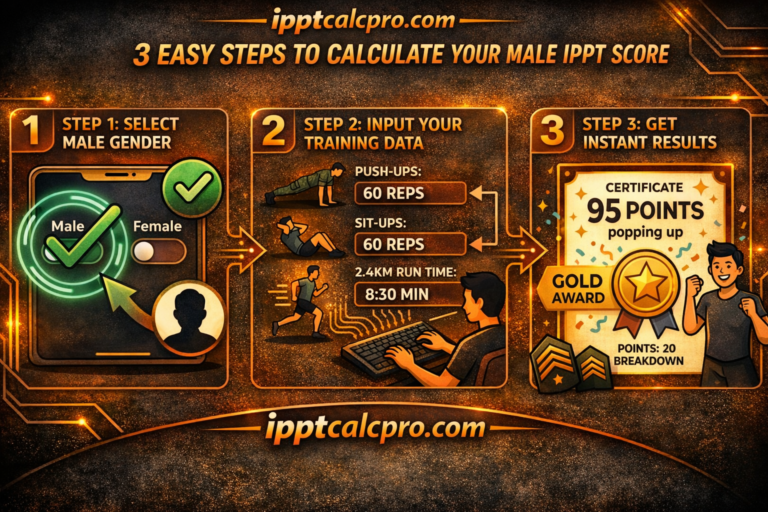
Rep requirements change depending on your age. Use our IPPT Calculator to discover your personal “Magic Number.”