
IPPT Calculator
Singapore Armed Forces IPPT Calculator
Our IPPT calculator gives you an instant score based on your age, gender, push-ups, sit-ups, and 2.4 km run time. You enter your numbers once and see exactly where you stand against MINDEF’s official scoring standards.
With this accurate score you can get ready for the test with a purpose instead of relying on guesswork. In the calculator each station is costing you the most points and how many more reps or seconds you need to reach Pass, Silver, or Gold. With a clear target, you can focus your training on the areas that will improve your overall score the most.
What is the IPPT Calculator?
IPPT stands for Individual Physical Proficiency Test, Singapore’s official fitness assessment, administered by the Singapore Armed Forces under guidelines from MINDEF and the Central Manpower Base. Every eligible serviceman completes it as part of his ongoing National Service obligations.
How to Use the IPPT Calculator?
IPPT Calculator is your go-to tool for assessing your IPPT score without extra management hassle. The use of this amazing calculator is not very complicated and time-consuming. Following the six easy steps, you can check your score, which is given below.
Step 1: Select Your Gender
To begin the calculation process, first, enter your gender because the scoring tables differ between genders based on physiological differences in strength and endurance.
Step 2: Choose Your Age Group
Well, the fitness expectations change naturally over time; a 20-year-old and a 45-year-old are held to different push-up and run time standards. So, in this step add your current age to get the correct results.
Step 3: Enter Push-Up Repetitions
Now add the number of push-ups you can complete within one minute. Count only full repetitions with proper form, since partial reps do not score during an actual test. Being honest with this number gives you a realistic projection rather than an inflated one.
Step 4: Enter Sit-Up Repetitions
Enter the number of sit-ups you can complete within one minute using correct technique. Your hands should stay behind your head or at your temples, with elbows touching your knees on every rep.
Step 5: Input Your 2.4 km Running Time
After, enter your best current 2.4 km time in minutes and seconds. Use a recent, honest time rather than a personal best from months ago. The run carries the heaviest weight in your total score, so this field has the biggest impact on your result.
Step 6: View Your Total Score Instantly
Click calculate to see your combined score out of 100 points. You get a full breakdown by station, your award category, and your projected cash incentive if applicable. The tool also shows exactly how many extra reps or seconds you need to reach the next award tier.
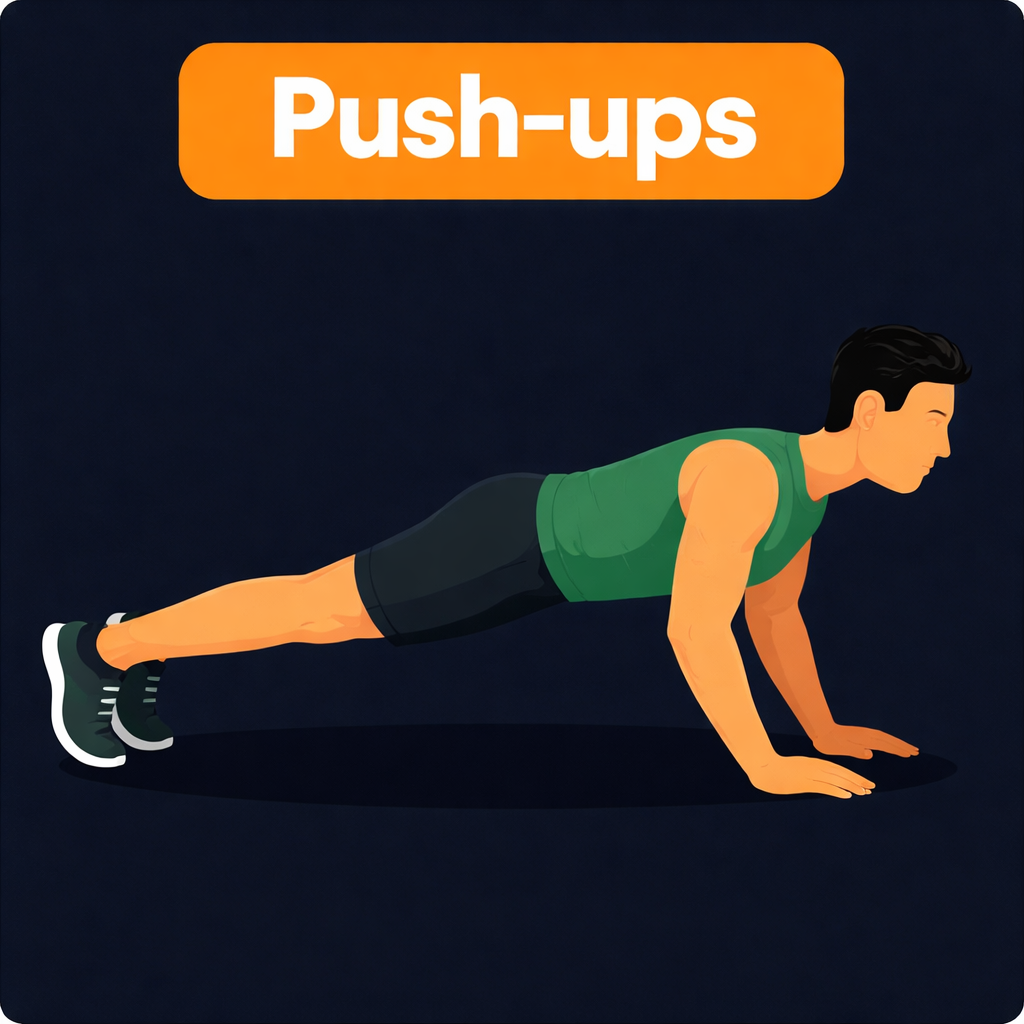
Push-Up Exercise:
To assess upper body strength and muscular endurance.
Maximum 25 Points
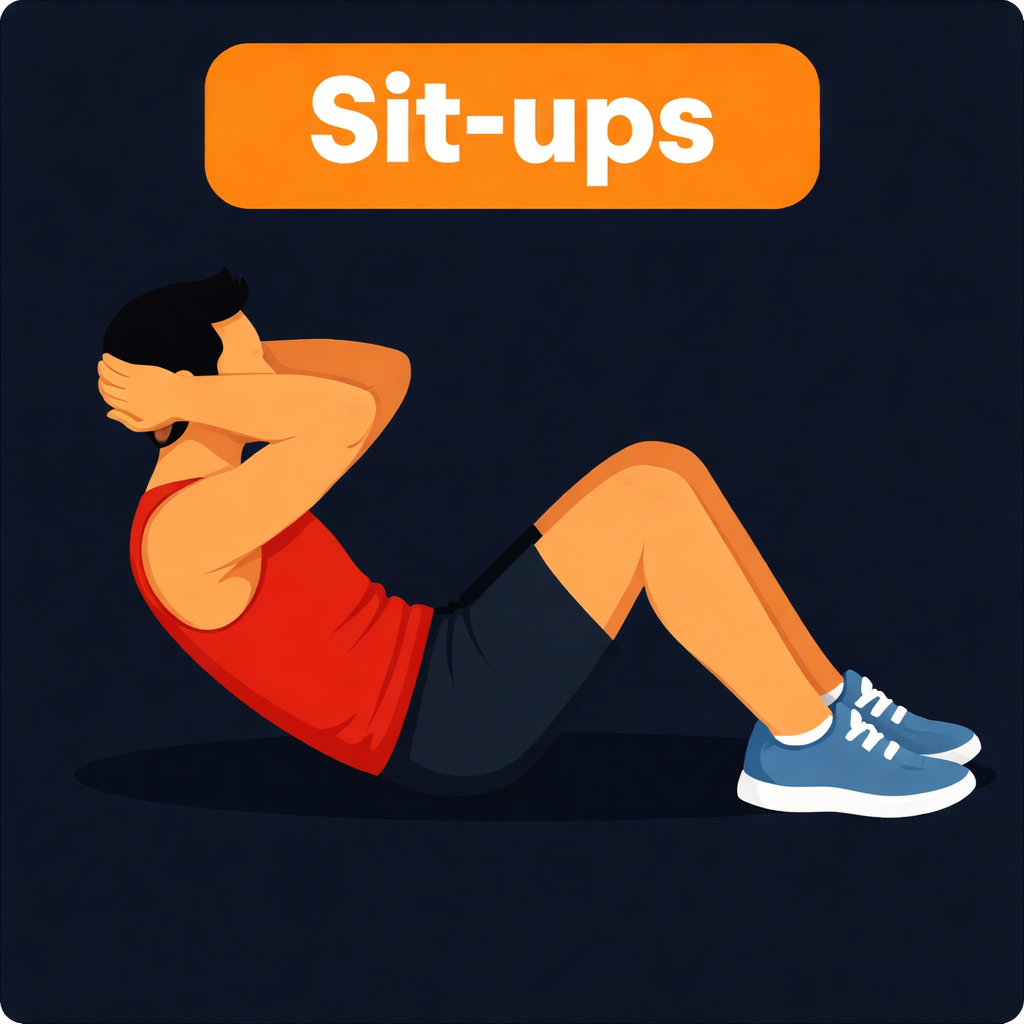
Sit-Up Exercise:
Assesses the performance of core and abdominal muscles
Maximum 25 Points
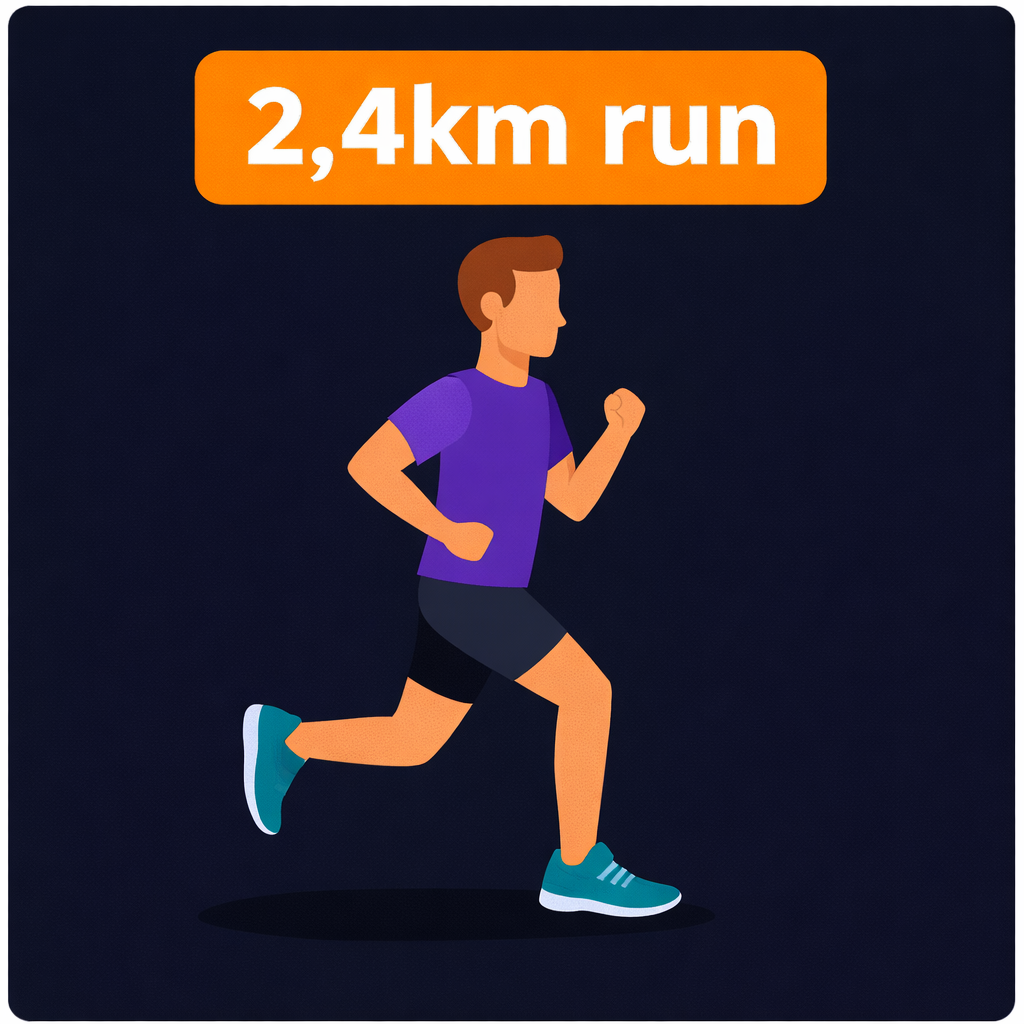
2.4km Running:
Evaluates cardiovascular fitness and lower body strength
Maximum 50 Points
How is the IPPT Score Calculated?
Do you really want to know how the IPPT score is calculated out of 100 points across three stations? In actuality, each station has its own maximum score, but your final award depends on your total. Scoring zero in any single station results in an automatic fail, regardless of how high your total appears. The points allocated to each station are listed here:
- Push-Ups 25
- Sit-Ups 25
- 2.4 km run 50
Age-Based Scoring
It can be calculated on the basis of your age group; you only have to enter your current age so you can get an accurate score.
Gender-Based Scoring
Men and women both do the same three stations for the same 100 points, just with different charts for reps and run times.
Benefits of Using an IPPT Calculator
Make sure to always use an accurate IPPT Calculator to track your score and authentic results. It represents the areas that need more practice and improve your overall score for appearing in real IPPT exams. Our tool is designed with a sleek design, multitasking and a huge number of other characteristics. All of these amazing slots are listed below:
Simple and Clear Interface
Input your data, including gender, age, and right stats of push-ups or running etc and get an instant score analysis. To use this magical tool, you have no need to wait for hours to get results or any special learning training to use it.
Accurate Results
What’s more exciting? It provides authentic results that show you where you are and how much you need to practice more. After getting the final score, you can set your realistic goals for what reps or runs you need for your targeted award.
Identify Weak Stations
One of the most strengthening aspects of this calculator is that it lets you spot which station is costing you the most points before the test day. Once you know a weak station, you can practice more in that to improve your score.
Boosting Your Motivation
Seeing your progress in real numbers pushes you to train harder. You get instant feedback on where you stand against your target score, and that clarity turns vague fitness goals into a clear mission. Small wins along the way, like moving from a Pass to a Silver, keep you coming back for more.
Fitness Tracking
You can log your push-ups, sit-ups, and 2.4km run times every session and watch your numbers improve over weeks. The calculator turns raw data into a clear picture of your fitness journey. Consistent tracking helps you spot plateaus early and adjust your training before your test date arrives.
Comparing Scores
Another worth mentioning benefit of our calculator is that it allows you to measure your performance against past attempts or against the score you need for your next award tier. Side-by-side comparisons show exactly which stations need work and which ones are already solid.
Who Can Use This Calculator?
Our IPPT calculator works for anyone who needs to check fitness scores against Singapore’s National Service standards. You don’t have to be a soldier to use it, and you don’t need to guess which chart applies to your situation. Pick your category below and get scores built for your exact standard, age group, and gender.
NSF
You’re training for Basic Military Training and every rep counts toward passing your benchmarks. The calculator shows you exactly where you stand against the standards your unit expects. Track your push-ups, sit-ups, and run time together so you walk into your test with real numbers behind you, not guesswork.
NSmen
Your 12-month IPPT window sneaks up fast when you’re juggling work and family. Punch in your latest results and see instantly whether you’re on track for a Pass or heading toward a retest. You can also check what score gets you an incentive payout before you commit to a training block.
Pre-Enlistees
You want to know what awaits before you even step into camp. The Pre-Enlistee IPPT calculator lets you test your current fitness against the exact standards used for recruits your age. Knowing your numbers early gives you months to close any gaps instead of scrambling on day one.
Regular Servicemen
Your fitness readiness gets checked year after year, not just once. This tool keeps your ongoing scores in one place so you can spot dips before they show up on an official test. Whether you’re SAF, SPF, or SCDF, the standards are built right in, so you never have to cross-check manually.
Servicewomen
Scoring standards for women follow a different scale, and guessing your numbers against the wrong chart wastes your effort. This calculator applies gender-specific benchmarks automatically, so your results reflect where you actually stand. You get accurate feedback whether you’re a regular or a volunteer working toward your own fitness goals.
Fitness Enthusiasts
You don’t need a uniform to want a real measure of your fitness. Comparing your push-ups, sit-ups, and run time against Singapore’s national IPPT standard gives you a benchmark most gym metrics can’t match. It’s a straightforward way to see how your training stacks up against a recognized, tested standard.
IPPT Test Components Explained
The IPPT consists of three stations completed in sequence: push-ups, sit-ups, and the 2.4 km run. Each station targets a different area of physical fitness and contributes a specific share of your total 100-point score.
Push-Ups
Within one minute, you have to complete as many correct push-ups as possible. While doing pushups, your body must stay in a straight line from head to heel throughout the movement. Lower your chest until it nearly touches the ground, then push back up until your elbows lock out fully. These push-ups contribute up to 25 points to your entire IPPT Score.
Training Tips:
- Practice push-ups on your knees first if your form breaks down.
- Keep your core tight to protect your lower back.
- Train in sets of 15 to 20 with short rests between.
- Add push-ups to your routine three to four times a week.
- Record your reps each session to track real progress.
SitUps
As like the push-ups you have one minute to complete as many correct sit-ups as possible with a proper technique. First lie flat with knees bent at roughly 90 degrees and feet anchored down. Your hands stay behind your head or at your temples, and your elbows must touch your knees at the top of each rep. Your shoulder blades must return to the ground at the bottom of every repetition.
Training Tips:
- Anchor your feet under a bench or ask a partner to hold them.
- Keep your chin slightly tucked to avoid straining your neck.
- Practice slow reps first, then build up your speed.
- Add planks to strengthen your core between sit-up sessions.
- Test yourself with a timed one-minute set every week.
2.4 km Run
To run the full 2.4 km distance, typically six laps of a 400m track, as fast as possible. Record your finishing time in minutes and seconds, and it will be converted directly into points using your age and gender chart. The run contributes up to 50 points, making it the single heaviest-weighted station in the entire test.
Training Tips:
- Run three to four times a week to build your base.
- Mix in interval training to boost your speed over time.
- Practice pacing so you don’t burn out too early.
- Add one long, slow run each week for endurance.
- Track your lap times to spot steady improvement.
Official IPPT Scoring Tables
Scoring tables convert your raw performance into points based on your age band and gender. The figures below reflect representative thresholds from current SAF scoring standards, and the calculator above applies the precise figures for your exact age.
Male Scoring Table
| Age Band | Push-Ups for 25 pts | Sit-Ups for 25 pts | 2.4 km Run for 50 pts |
| Below 22 | 50 reps | 45 reps | 09:25 |
| 25–27 | 44 reps | 44 reps | 09:40 |
| 35–37 | 35 reps | 37 reps | 10:45 |
| 50–52 | 25 reps | 29 reps | 12:00 |
Female Scoring Table
| Age Band | Push-Ups for 25 pts | Sit-Ups for 25 pts | 2.4 km Run for 50 pts |
| Below 22 | 25 reps | 45 reps | 09:25 |
| 25–27 | 20 reps | 30 reps | 12:00 |
| 35–37 | 18 reps | 27 reps | 12:45 |
| 50–52 | 12 reps | 22 reps | 13:30 |
IPPT Result Categories
Your final score places you into one of five categories, each carrying its own recognition level and cash incentive.
| Category | Points Required | Cash Incentive |
| Fail | 50 or below, or 0 in any station | None, Remedial Training required |
| Pass | 51–60 | None |
| Pass with Incentive | 61–74 | Up to $200 |
| Silver | 75–84 | $300 |
| Gold | 85 and above | $500 |
How to Improve Your IPPT Score
If your final score is below 50 or 0 in any station, then there is no need to panic. Just practice and improve your score. In this section, we have covered a few easiest methods that help you improve your IPPT Score.
Increase Push-Up Performance
Train with a mix of standard push-ups, incline variations, and tricep-focused work to build raw strength. Practice full sets under time pressure so your body adapts to the one-minute format specifically. Core stability work prevents the hip sag that costs reps late in the set.
Improve Sit-Up Endurance
Improve your core endurance through planks, Russian twists, and timed sit-up intervals. For this do practice with a partner holding your feet, since that setup mirrors actual test conditions.
Run Faster in the 2.4 km
Running score contributes more so build a cardio base with two to three easy-paced runs each week before adding intensity. Interval training, such as 400m repeats at a faster-than-race pace, to raise your VO2 max.-pol
Training Consistently
Schedule three to four structured sessions per week that rotate between strength, core, and cardio work. Progress gradually by adding small increments in reps or shaving seconds off your run time. Consistency over several months produces far better results than sporadic, intense bursts of training.
Recovery and Nutrition
Prioritise seven to eight hours of sleep nightly to support muscle recovery and performance. Maintain adequate protein intake to support strength and endurance gains from your training sessions. Stay hydrated in the days leading up to your test, since dehydration directly hurts running performance.
Common Reasons People Lose Points
Each problem has a reason behind it; if you lose points, then there must be a cause. You have to analyze that reason before improving your IPPT Score. So, we have elaborated on a few common reasons here to help you improve your score. Let’s explore all of these reasons.
Incorrect Push-Up Form
Sagging hips and incomplete elbow extension are the two most common reasons reps go uncounted. So make sure to do push-ups in an accurate position as described above to get accurate results.
Poor Sit-Up Technique
Failing to bring elbows fully to the knees or lifting shoulder blades off the ground too early costs valid reps. Rushing the movement without a full range of motion is a frequent mistake under time pressure. Slower, complete reps consistently outscore fast, incomplete ones.
Pacing Mistakes During the Run
Starting the run too fast in the first 400m is the single biggest pacing error servicemen make. Burning out early leaves nothing for the final stretch, where most points are actually earned or lost.
Skipping Warm-Up
Many fitness enthusiasts often jump straight into push-ups or sit-ups without warming up, which can increase injury risk and reduce early-rep output. Always keep in mind that a short dynamic warm-up improves your blood flow and range of motion before the clock starts.
Poor Breathing Control
Last but not least, holding your breath during push-ups or sit-ups causes early fatigue and a noticeable drop in pace. So, exhale on exertion and inhale on recovery phases keep your muscles supplied with oxygen longer.
Tips to Achieve Gold in IPPT
- Structure your week with three strength sessions, three core sessions, and two to three cardio sessions.
- Space rest days appropriately to avoid overtraining any single muscle group.
- A 12 to 16 week plan gives most servicemen enough time to move from Pass to Gold.
- Add standard and diamond push-ups for chest and tricep development.
- Include planks and dead bugs to stabilize the core under fatigue.
- Use resistance band work to build supporting shoulder strength.
- Run two easy-paced base sessions each week.
- Add one interval session using 400m repeats at race pace or faster.
- Include one tempo run at a controlled, sustainable Gold-target pace.
- Get seven to eight hours of sleep every night without exception.
- Add active recovery walks or light stretching on rest days.
- Get adequate protein intake to support muscle repair between sessions.
- Eat a light, familiar meal two to three hours before testing.
- Arrive early enough to complete a proper warm-up.
- Hydrate steadily in the 24 hours before your session, not just the morning of.
IPPT Preparation Checklist
| Timeframe | Action |
| One month before | Test your baseline in all three stations. |
| One month before | Build a plan around your weakest station. |
| One month before | Track progress weekly with the calculator. |
| One week before | Taper training intensity. |
| One week before | Confirm test date, venue, and time on NS Portal. |
| One week before | Focus on technique, not new personal bests. |
| Night before | Eat a balanced dinner with carbs and protein. |
| Night before | Lay out your shoes and attire. |
| Night before | Sleep early. Skip last-minute chart reviews. |
| Test day | Eat light, 2 to 3 hours before your session. |
| Test day | Arrive early for a proper warm-up. |
| Test day | Pace yourself across all three stations |
Final Thoughts
Summing up, calculating your IPPT score regularly turns an annual fitness obligation into a trackable, achievable goal. It shows exactly where you stand and which station needs the most work. Use this calculator every few weeks throughout your training cycle and get the highest score in your final exams.