
Master the IPPT: Smart Strategies to Achieve Gold or Silver
Most NSmen step into the fitness corner or FCC with hope and do their best, but many simply walk in, run too hard, pump endless push-ups, almost collapse, and then realize they missed a Silver award by just one point. From my two decades of coaching, I have learned that IPPT is not only about fitness. It is also about math, control, and using a clear guide to show the smartest way to achieve Gold or Silver. Every coach knows this game is about reading your score, knowing your target, and choosing the right strategy instead of wasting energy.
A smart plan uses strategies, planning, and the IPPT Calculator as your main calculator to find the Path of Least Resistance. That means using the smart way and the least resistance route to hit your target score with the right effort, training, endurance, stamina, performance, and workout balance, without burning out. In simple words, the scoring system rewards people who Master the fitness game and the math game, not just those who run as hard as they can or pump out push-ups. My coaching experience over decades has shown that many men were only missed by one point, even though they could still hit your target score with better resistance control, better use of every point, and a sharper focus on the final award rather than burning out.
Understanding Effort vs Score
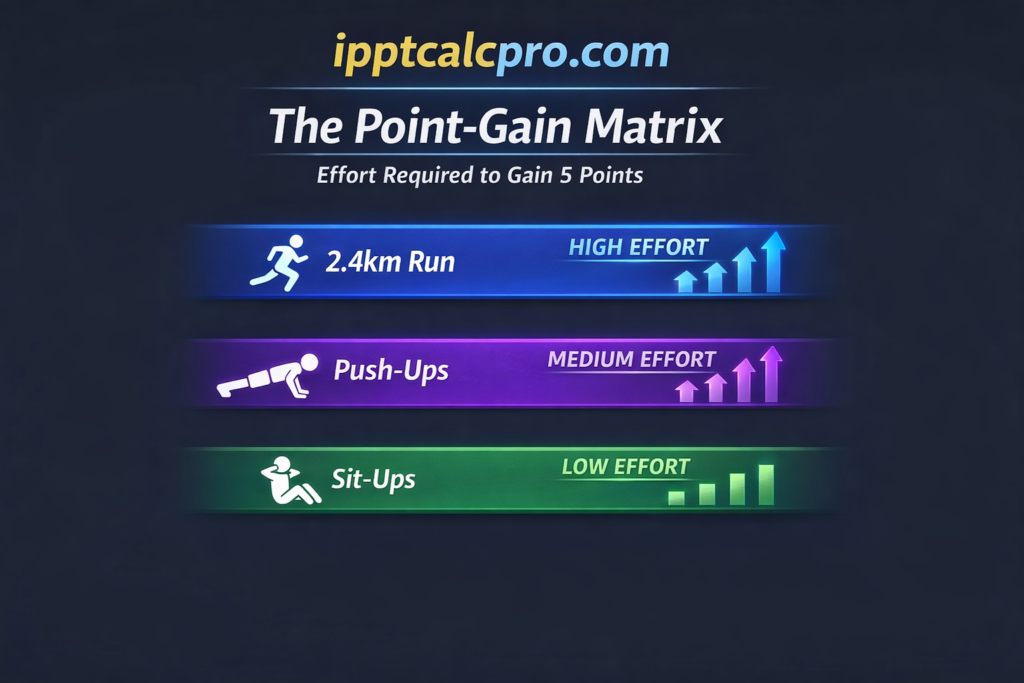
I wish more people understood this earlier: in IPPT, not all stations are created equal. Some give points cheaply, while others demand very hard work for very little return. From what I have seen over years of coaching, when you train everything the same way, you waste time and energy. A better training approach looks at point return, station value, and scoring efficiency first, then matches your effort, resource use, and performance strategy to the areas that give cheap points instead of low return. That is the heart of smart training: avoid inefficient training, reduce high effort and empty hard work, and protect yourself from wasted energy and wasted time while chasing the best equal value you can get from each station.
The Reality Check
For most trainees, gaining five points in sit ups is often three times easier than improving the two point four run. I have seen this on the ground, year after year: sit ups improve fast when technique and rhythm are right, but running usually takes weeks of conditioning just to shave a few seconds. This is not just an opinion. It is a practical lesson from real coaching, and it shows why smart IPPT planning should respect where progress comes faster and where improvement demands more time.
Point Saturation
At some station, progress can hit plateaus faster than people expect. You may push for two more reps and still get zero points because you are stuck in the same score band, while a small change like shave ten seconds off your run can help you jump three points. From what I have seen in training, blindly chasing reps can backfire when the scoring table simply flattens out, so the smarter move is to know where effort still creates score and where extra work gives almost nothing.
The Trainer’s Secret
Every trainee has a natural station and a grind station. One improves easily, while the other fights every step, and that is why the real key is to train smart. From my experience, the best performers learn to milk points where they come cheap, then survive the harder stations without burning out. This is often the difference between average results and the ability to hit Gold with a plan that feels controlled, realistic, and repeatable.
The Five Hundred Dollar Roadmap Strategic Award Tiers
The right way to see IPPT is not just fitness. It is about turning effort into cash, because you already sweat, so your effort should bring real cash and get you paid properly.
The Pass with Incentive Two Hundred Dollars
For every NSman, this level is the baseline. You are not training to break records. You are training to stay ready, and for many people, two short sessions a week is enough to build a steady routine without adding stress.
A simple plan works best: one focused run, one strength session, maintain form, keep numbers stable, and avoid last minute panic. In my experience, this stage is won through consistency, not pushing until you break, because smart preparation is often more useful than chasing dramatic progress.
The Silver Sprint Three Hundred Dollars
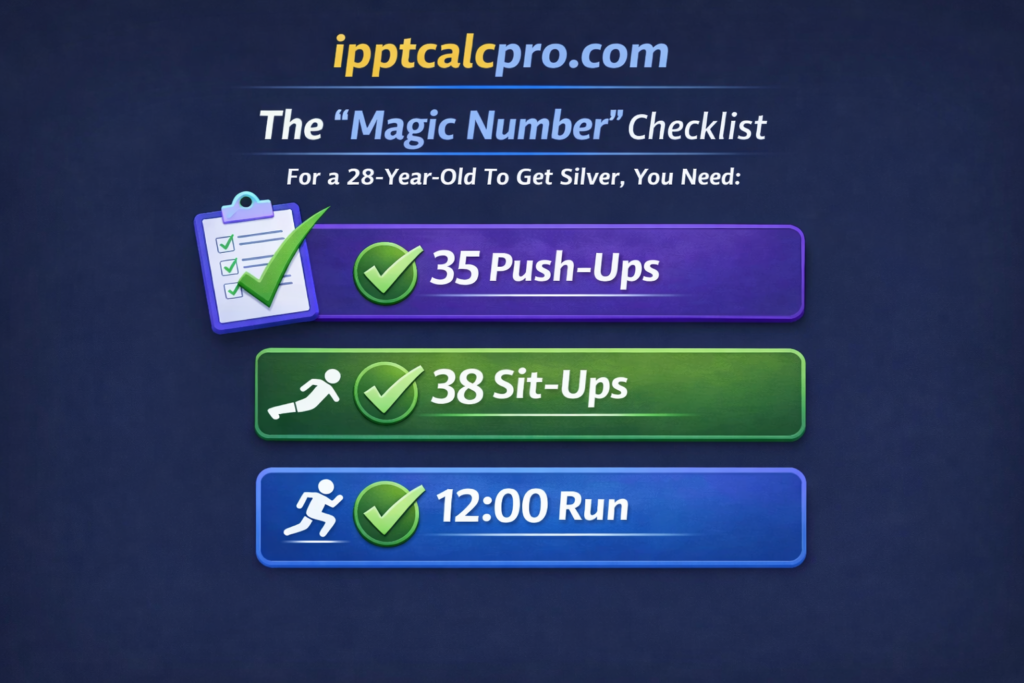
For most working adults, Silver is the sweet spot because it offers a solid payout without overhauling your lifestyle. In my experience, with smart training, this is very achievable in eight to ten weeks when trainees focus on strong stations, protect their weak ones, and manage fatigue with more control.
I have seen many trainees hit this comfortably once they stop overtraining and start training with intent.
The Gold Standard Five Hundred Dollars
Gold starts at eighty five points or more, and in my experience, it does not come from going all out once in a while. It comes from showing up regularly, because three to four quality sessions a week will almost always beat one crazy session every ten days. The people who reach this level stay disciplined when motivation drops, learn to stay steady, and avoid becoming kan cheong, which is why Gold begins to feel predictable and not scary instead of stressful.
Using the IPPT Calculator Like a Pro
Before You Start
Do not use the calculator only to see your score.
Use it to plan your strategy and figure out the best way to improve.
Scenario Planning Checklist
Once you understand the pattern, your training becomes more focused and less random.
The One Point Buffer Rule
I have seen many trainees miss Gold by just one point and feel frustrated afterward. This checklist helps you avoid that.
Age Group Advantage Checklist
Mark these off, and you’ll stop guessing. You’ll begin training with confidence.
Common Tactical Errors
Training the Run
Simply running every day won’t ensure success. A lot of trainees skip push ups and sit ups, only to find themselves exhausted by the time they hit the run. The static stations also take a toll on your core and legs, which can leave you feeling drained. Remember, the IPPT is a full-body test, not just a test of endurance.
The Zero Buffer Trap
Targeting the exact minimum is a gamble. A single mistake or no count, and you miss the mark. It’s always better to train with a bit of a buffer. I’ve seen far too many trainees walk away frustrated because they pushed themselves too close to the edge.
Station Order Fatigue
Push ups and sit ups impact your breathing and pacing. If you push too hard at the start, you’ll feel it in your run later. It’s important to control your effort and stay calm—don’t let nerves take over. Remember, smart pacing will always beat going all-out without thinking.
The Ultimate 4-Week Points Boost Plan
Here’s a plan that truly works on the ground—a four week strategy designed to help you lift your IPPT score without burning out. It’s a balanced attack, tailored for trainees who need a realistic and focused approach. This plan is simple enough for working adults, making it both achievable and effective in improving your total score without overwhelming you.
Phase 1: Foundation, Week 1
Week 1 is all about laying the groundwork. Take your time and forget about rushing or ego. Focus on getting the basics right:
- Proper sit up form and rhythm
- Full push up lockout
- Find a comfortable run pace, don’t worry about timing yet
This week, you’re teaching your body what proper reps feel like. Skipping this step often leads to frustration when points seem to disappear. Foundation is key for the rest of your progress.
Phase 2: Volume, Weeks 2&3
Now, we increase the volume in a smart way. It’s not about doing more, but doing it better.
- Short sets with controlled rest
- Focus on maintaining form as you get tired
- Stop one or two reps before reaching failure
At this point, your points will start going up. You’ll feel tired, but not wiped out. If you’re feeling completely drained after every session, you’re overdoing it.
Phase 3: The Taper, Week 4
Week 4 is all about refining and sharpening your efforts. For the run:
- Do short intervals at a faster pace
- Take longer breaks between each interval
- Skip the long, slow runs
Strength work should become lighter and sharper. You should feel faster and more agile. By test day, your body will know the rhythm. Stay calm, trust the process, and let the points come in. Remember, consistency beats intensity every time.
Closing Advice The Mental Game
When facing the ELISS machine, don’t let it get into your head. Focus on knowing your numbers, trust your training, and stay calm on the mat. Use the calculator to track your progress and guide your prep. True confidence comes from preparation, not luck, so make sure you’ve done the work and believe in what you’ve practiced.